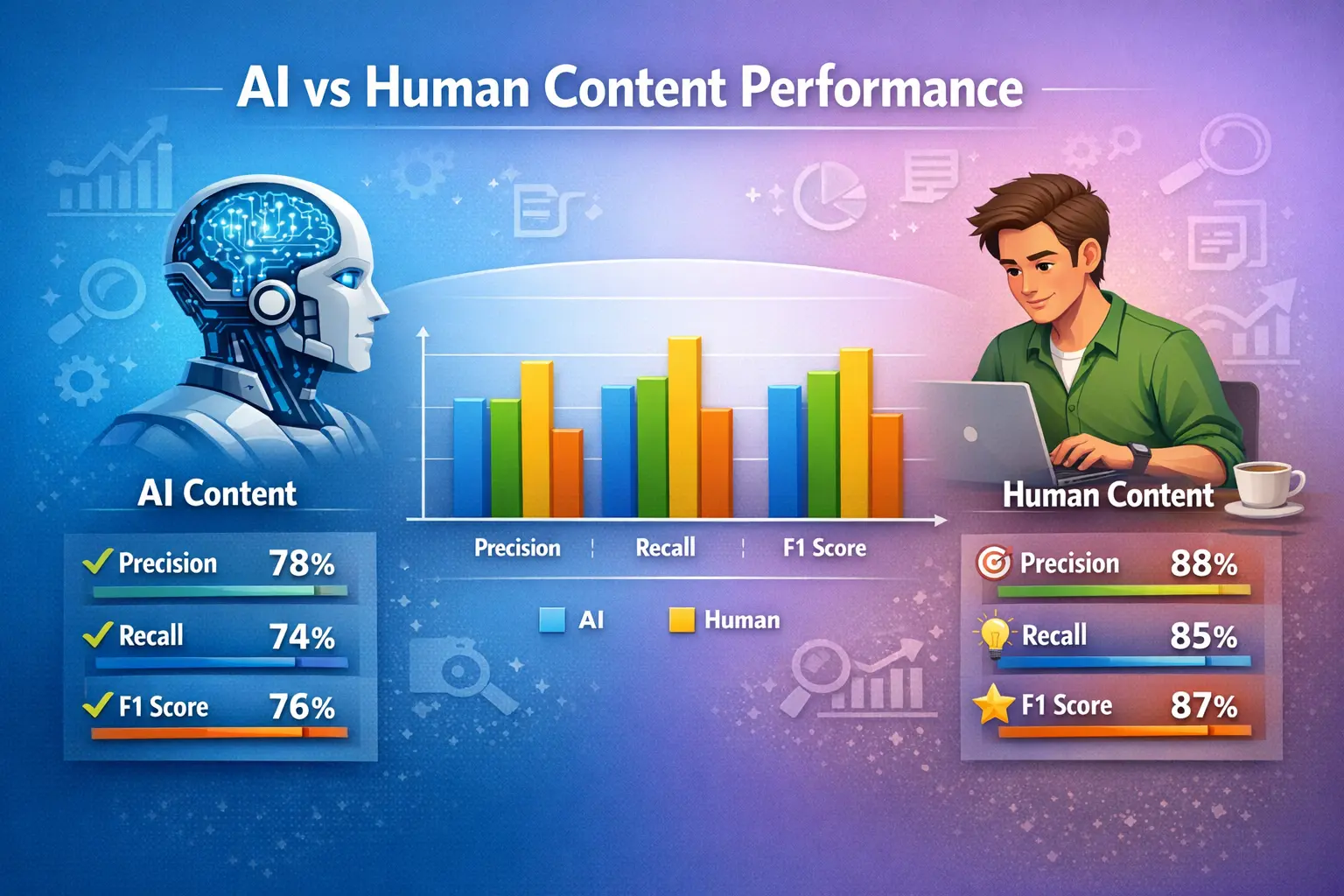
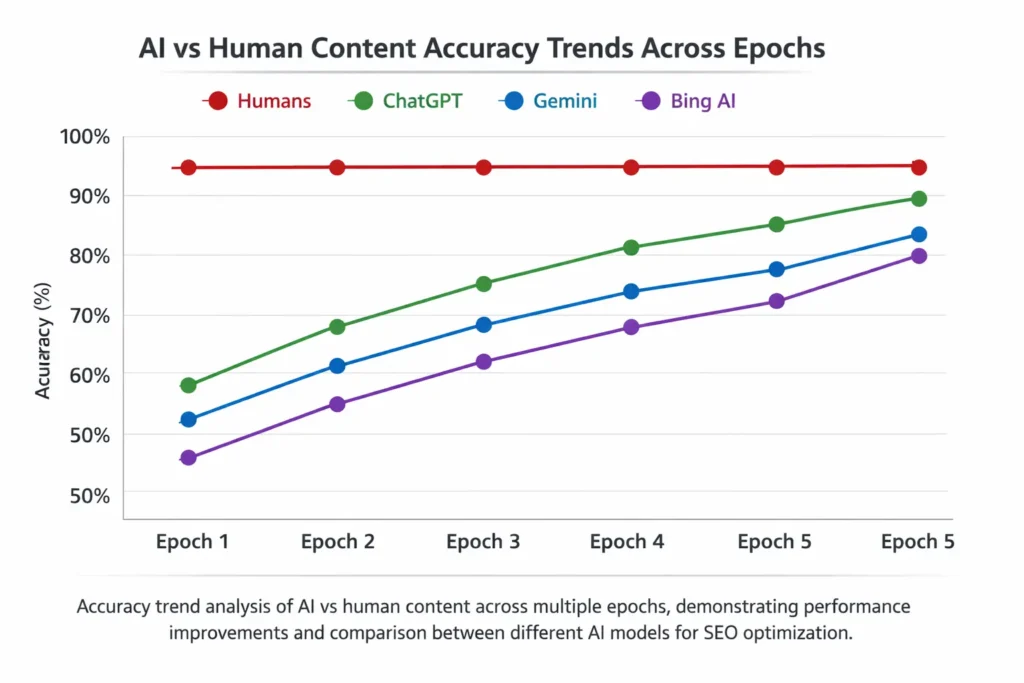
In today’s rapidly evolving digital world, businesses and marketers constantly ask: what’s the best way to attract and engage audiences through AI-driven strategies or human creativity? This question is especially important in digital marketing, particularly for SEO, where performance and user engagement both matter. In 2026, the competition between AI vs Human Content has never been fiercer, as brands strive to create content that not only ranks high on search engines but also resonates with readers. AI offers speed, scalability, and efficient optimization, while human content brings creativity, authenticity, and emotional depth. By leveraging the strengths of both approaches, businesses can develop a balanced strategy that enhances SEO performance, boosts user engagement, and builds long-term credibility ultimately maximising reach and impact.
Let’s Understand Artificial Intelligence Generated Content
What is AI Content?
AI content refers to text, images, or multimedia generated by artificial intelligence using natural language processing (NLP) and machine learning algorithms. Tools like OpenAI’s GPT models can create articles, blog posts, product descriptions, and even creative writing. AI content is powered by vast datasets and can produce output quickly, following patterns in language and style learned from millions of sources.
Benefits of AI Content
AI content offers unmatched speed and scalability. Businesses can generate large volumes of content in hours, covering multiple topics and keywords efficiently. It is highly cost-effective, reducing the need for extensive human resources, and can produce SEO-optimized content with keyword placement, headings, and meta tags. AI is particularly useful for repetitive, factual, or data-driven writing where speed and accuracy matter most.
Limitations of AI Content
Despite its advantages, AI content struggles with creativity, emotional nuance, and context. It may produce content that sounds generic or formulaic, which can affect brand voice and engagement. Over-reliance on AI can also create risks such as factual inaccuracies, plagiarism concerns, or SEO penalties if content is not reviewed and edited by humans.
How is Human-Created Content Defined?
What is Human Content?
Human content is written or created by individuals who bring creativity, experience, and emotional intelligence to their work. Unlike AI, human writers can adapt their tone, storytelling, and style based on audience preferences, brand voice, and cultural nuances. Human content excels in originality, thought leadership, and building trust with readers.
Advantages of Human Content
The primary advantage of human content lies in its authenticity and engagement. Humans can craft compelling narratives, connect emotionally, and provide insights based on expertise and real-world experience. Human writers can also address complex topics with critical thinking and nuanced analysis that AI often cannot replicate. These qualities increase trust, user retention, and long-term brand value.
Limitations of Human Content
Human content creation is slower, more expensive, and less scalable than AI. Producing high volumes of content consistently can be challenging, especially for small teams. Additionally, humans may miss some SEO optimization opportunities that AI can handle automatically, requiring more time for keyword research and formatting.
Core Comparison AI Content vs Human Content
Speed and Efficiency
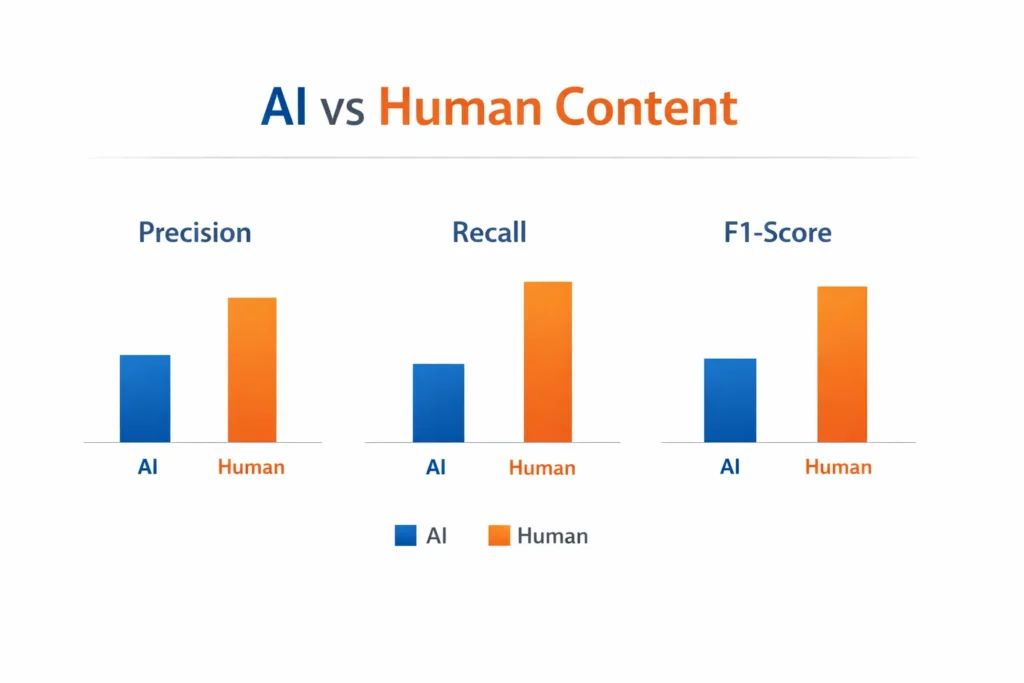
AI content is significantly faster, capable of generating hundreds of articles in the time it takes a human to write a single piece. However, humans provide thoughtful, nuanced content that may take longer to produce but often resonates better with readers.
Quality and Depth
Human writers excel in providing in-depth, well-researched, and contextually rich content. AI can match factual accuracy but often lacks depth in analysis, perspective, or narrative structure.
Creativity and Originality
Creativity remains a human advantage. While AI can mimic patterns, humans can innovate, create metaphors, humor, and stories that deeply engage audiences.
Cost and Scalability
AI is cost-effective at scale, producing content rapidly without additional labor costs. Human content is more expensive but ensures higher originality and long-term engagement.
SEO Performance
AI content can be optimized for keywords, headings, and meta descriptions automatically, helping with search rankings. Human content often achieves better engagement metrics, like dwell time and social shares, which also boost SEO.
User Engagement and Trust
Humans naturally create trust through authentic storytelling, expert insights, and relatable language. AI-generated content requires human oversight to maintain credibility and prevent generic messaging.
Examples & Illustrations
To truly understand the differences between AI and human content, let’s look at concrete examples and side-by-side comparisons across key features:
Real-Life Examples
Climate Change Articles
AI Content:
Climate change results from the buildup of greenhouse gases in the atmosphere, causing higher global temperatures, melting polar ice, and more frequent extreme weather events.
Human Content:
Standing on the Alaskan coastline, I watched glaciers that had existed for thousands of years slowly crumble into the sea. It was a vivid reminder that climate change is not just numbers on a chart it’s reshaping our planet in real time.
Product Descriptions
AI Content:
This stylish red dress is perfect for any occasion. Made from high-quality materials, it offers both comfort and elegance.
Human Content:
Turn heads at your next event with this stunning red dress. Made from premium silk, it radiates elegance while offering unmatched comfort. Whether it’s a formal dinner or a casual gathering, this dress is your go-to for making a lasting impression.
Marketing Copy
AI Content:
The new smartphone offers a high-resolution camera, fast processor, and long battery life. It’s the perfect choice for tech enthusiasts.
Human Content:
Capture life’s best moments with unmatched clarity using our latest smartphone.Equipped with cutting-edge technology, it keeps you connected while transforming every photo into a work of art.”Embrace innovation, embrace the extraordinary.
Side-by-Side Comparison Table
| Feature | AI Content | Human Content | Key Takeaway |
| Speed | Generates summaries or articles in seconds | Takes longer, requires research & drafting | AI wins for speed; humans win for depth |
| Creativity & Originality | Follows patterns, can sound generic | Unique phrasing, metaphors, storytelling | Human content creates stronger emotional engagement |
| Tone & Authenticity | Formulaic, may lack personality | Warm, relatable, brand-aligned | Humans build trust & brand voice more effectively |
| SEO & Scalability | Optimized automatically, scalable | Manual optimization, slower | AI scales easily; humans improve engagement metrics |
| Examples & Narrative | Limited or abstract examples | Rich, contextual, real-life scenarios | Humans better at connecting with readers emotionally |
What is the Timeline of AI in Content Creation?
How Did AI Begin? (1950s–1980s)
The concept of AI began in the 1950s, with early computers performing simple tasks and rule-based logic. During this era, content generation was theoretical, limited to basic algorithms and symbolic processing.
How Did Rule-Based Automation Shape AI? (1990s–2000s)
In the 1990s, early automation tools like chatbots and template-based content emerged. These systems could generate simple reports or news articles using pre-defined rules but lacked true understanding of language.
NLP Advancements and Early AI Writing (2011–2015)
Natural Language Processing breakthroughs allowed AI to understand context, grammar, and sentence structure. Early AI writing tools like Automated Insights began producing financial reports and sports summaries automatically.
What Were the Key Developments in AI Writing Tools (2016–2022)?
The development of GPT-2 and GPT-3 enabled AI to generate more human-like content. Businesses started using AI for blogs, marketing copy, and social media posts. AI content tools became widely accessible and began to influence SEO strategies.
How Hybrid Content Strategies Are Shaping 2023–2026?
Today, in 2026, most successful content strategies combine AI speed with human creativity. AI generates drafts, outlines, and SEO-focused text, while humans refine tone, narrative, and factual accuracy, creating hybrid content that ranks well and engages readers.
What Can We Expect from AI and Human Content in the Future (2026–2035)?
AI will become more creative, understanding context, humor, and nuance. Hybrid teams will dominate content creation, using AI for research, draft writing, and optimization, while humans focus on storytelling, strategy, and unique perspectives. SEO will increasingly reward engagement metrics, creativity, and trust signals over purely keyword-driven AI content.
What Are the SEO Effects of AI and Human-Created Content?
Keyword Optimization
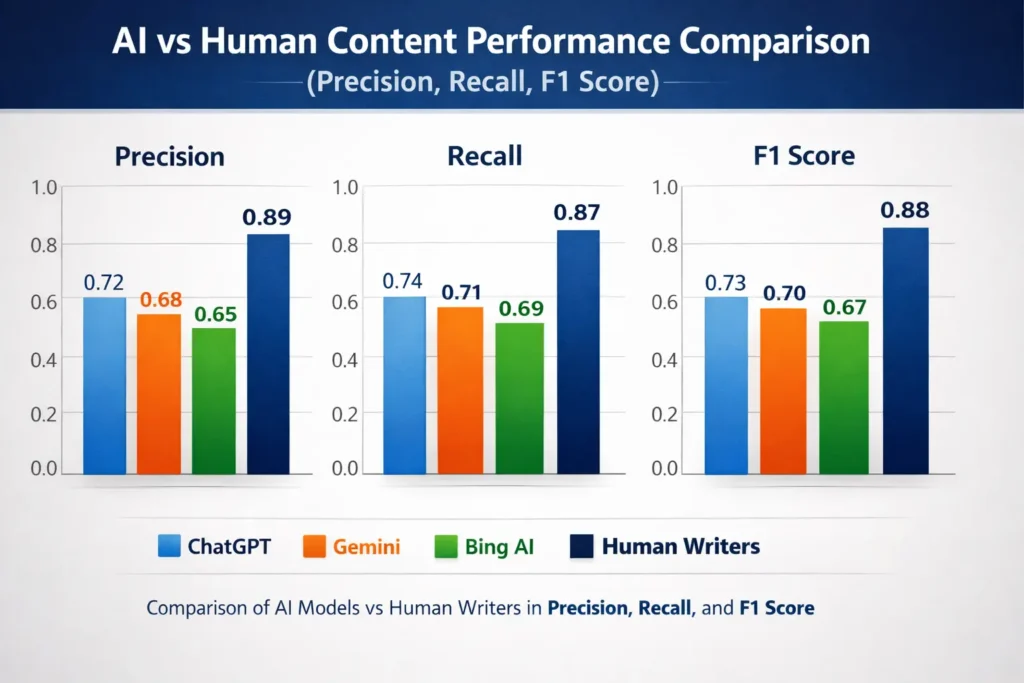
AI excels at finding and placing keywords naturally within content, improving search engine rankings for targeted terms. Humans must carefully research and strategically integrate keywords.
User Intent and Engagement
AI can optimize for keywords but may struggle with intent-based writing. Human content can better address user questions, concerns, and emotional triggers, increasing engagement and dwell time.
E-E-A-T and Google Ranking Signals
Google prioritizes Expertise, Experience, Authoritativeness, and Trustworthiness (E-E-A-T). Human-created content often naturally scores higher, though AI can supplement by creating drafts and factual content efficiently.
How Will AI Content Evolve in the Coming Years?
AI Creativity Improvements
AI will increasingly generate creative narratives, humor, and metaphors, narrowing the gap with human writing. Advanced models may co-write with humans to maintain brand voice and originality.
Multimodal Content (Text, Images, Video)
AI is moving beyond text to generate images, videos, and interactive content. This will allow content teams to produce full campaigns faster and more efficiently.
Ethical Considerations and Transparency
As AI content becomes more common, transparency about AI use is critical. Brands may label AI-assisted content to maintain trust and adhere to ethical guidelines.
AI-Human Collaboration Strategies
The most effective content strategies will involve hybrid teams, where AI handles research, drafts, and SEO, and humans focus on storytelling, critical thinking, and engagement.
What Are the Best Use Cases for AI Content?
Use AI for research summaries, product descriptions, repetitive content, and SEO optimization. It saves time and ensures consistency across large-scale campaigns.
When Is Human Content Most Effective?
Reserve human writers for thought leadership, storytelling, brand-building, and nuanced topics that require emotional intelligence, authority, or creativity.
What happened when we margate both effect together
What’s the Best Way to Combine AI + Human Content for SEO?
A hybrid approach balances speed, cost, and quality. AI drafts optimized content quickly, while humans refine, fact-check, and enhance readability, resulting in content that ranks well and engages audiences.
How Do Readability and Engagement Differ Between AI and Human Content?
Reader interaction is a key factor in content performance. AI-generated content excels at creating well-structured, easy-to-scan articles with clear headings, bullet points, and concise paragraphs, making it highly readable for both users and search engines. This improves time on page, lowers bounce rates, and ensures content is accessible for voice search and AI assistants. In contrast, human-written content engages audiences on an emotional and personal level. Through storytelling, humor, and nuanced language, humans capture attention, build trust, and encourage shares and comments. Combining AI for structure and SEO with human creativity for emotional resonance produces content that ranks well while keeping readers fully engaged. In 2026, this hybrid approach is critical for achieving both strong SEO performance and meaningful user engagement.
5 Must-Have AI Tools to Boost Your SEO Performance
Using the right AI tools can dramatically improve efficiency and SEO performance. Here are the top tools and what they do:
ChatGPT – A powerful AI content generator for drafting articles, blogs, product descriptions, and marketing copy quickly. It helps brainstorm ideas and create readable, structured content while saving time.
Jasper – An AI writing assistant for marketers, Jasper generates engaging content tailored to your brand voice. It excels at long-form articles, social media posts, and ad copy, making content production faster and consistent.
Copy.ai – Specializes in creative content generation, including headlines, email campaigns, and social posts. Copy.ai ensures originality and creativity while speeding up writing.
Writesonic – Ideal for SEO-focused content, Writesonic generates blog posts, landing pages, and product descriptions with keyword optimization, improving search engine visibility.
Rytr – A versatile tool for quick content creation, perfect for short-form content like social media captions, ad copy, or summaries, maintaining quality and tone.
Additional SEO & Editing Tools
Grammarly – Ensures content is grammatically correct, clear, and professional, improving readability and style.
Surfer SEO – Evaluates competitor content, analyzes keywords, and optimizes your content structure to boost search engine rankings and visibility.
Clearscope – Helps create high-ranking SEO content by analyzing top-performing pages and suggesting relevant keywords.
Combining these AI tools with human oversight ensures content is efficient, scalable, and creative while maintaining accuracy and alignment with your audience.
AtDetral.com, we leverage top AI and SEO tools like ChatGPT, Jasper, and Surfer SEO to craft high-quality, optimized content that drives engagement and boosts search rankings.
FAQs
1. What is the key difference between AI vs human content in SEO?
AI excels at speed, structure, and volume; human content provides creativity, depth, and emotional resonance.
2. Which is better for rankings: AI vs human content in 2026?
A hybrid approach performs best, combining AI’s efficiency with human insight for long-term SEO success.
3. Can AI vs human content both rank on Google successfully?
Yes, if the content is high-quality, optimized for user intent, and provides value.
4. Does Google favor AI vs human content for search results?
Google prioritizes quality, relevance, and trustworthiness over the content’s origin.
5. How can you identify AI vs human content easily?
AI content may appear formulaic, overly structured, or repetitive, while human content often has nuance, storytelling, and emotional appeal.
6. Is AI vs human content more effective for user engagement?
Human content typically engages users more due to personalized insights and narrative style.
7. Which builds more trust: AI vs human content?
Human content builds stronger trust and credibility with readers.
8. Can combining AI vs human content improve SEO performance?
Yes, hybrid strategies leverage AI for scale and human input for authenticity and E-E-A-T.
9. What are the risks of relying only on AI vs human content?
AI-only content can feel generic or lack accuracy; human-only content may be slower and more costly.
10. What is the best strategy to balance AI vs human content?
Use AI for drafts, SEO optimization, and volume; humans add refinement, storytelling, and brand alignment.
Final Thoughts
In 2026, the future of content lies in hybrid AI-human strategies. AI accelerates production, optimizes for SEO, and handles repetitive tasks, while humans ensure authenticity, creativity, and engagement. Brands that leverage both will dominate search rankings, build trust, and provide valuable experiences for users. Preparing for this hybrid era is essential to stay competitive in the evolving digital landscape.